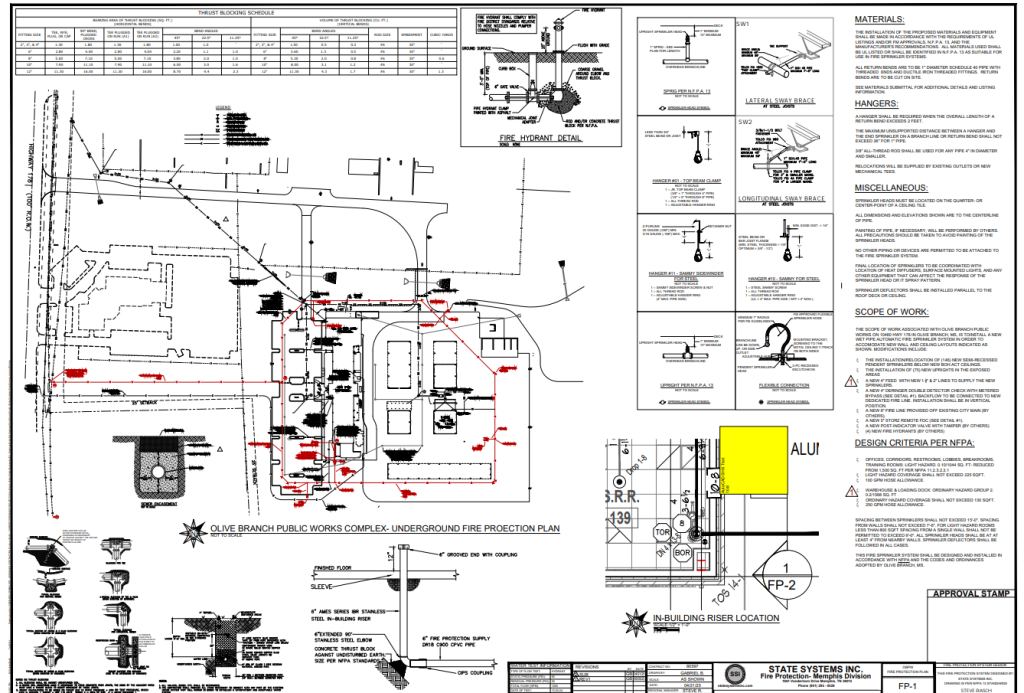
Designing a fire protection system is not just about installing sprinklers or alarms. It is a specialized process that blends engineering, code compliance, and safety planning. The individuals who design these systems must ensure that every building, whether it is a high-rise, hospital, warehouse, or restaurant, is properly equipped to protect people and property.
Fire Protection Engineers
The primary professionals responsible for designing fire protection systems are fire protection engineers. These are licensed engineers who specialize in evaluating fire risks and creating systems to control or suppress fires. Their role often includes:
- Performing hazard analyses and risk assessments
- Designing sprinkler systems, fire alarms, and suppression systems
- Ensuring compliance with national codes like NFPA 13 (sprinklers), NFPA 72 (fire alarms), and NFPA 101 (Life Safety Code)
- Coordinating with architects, contractors, and code officials during building design and construction
In many jurisdictions, fire protection engineers must stamp or approve plans before installation can proceed.
NICET-Certified Designers and Technicians
Alongside engineers, NICET-certified fire protection designers and technicians play a key role. NICET (National Institute for Certification in Engineering Technologies) provides credentialing for professionals who demonstrate expertise in fire protection system design. These individuals often prepare detailed drawings, hydraulic calculations, and material lists. They ensure the systems will work as intended in real-world conditions.
Collaboration with Architects and Contractors
Fire protection system design is never done in isolation. It involves close collaboration with:
- Architects, who determine building layout, occupancy type, and egress paths
- General contractors, who oversee construction and coordinate trades
- Mechanical, electrical, and plumbing (MEP) engineers, who integrate fire protection with other building systems
- Authorities Having Jurisdiction (AHJs), such as local fire marshals, who review and approve plans
This collaboration ensures fire protection is not an afterthought but a fully integrated part of the building.
Types of Systems That Require Professional Design
Professional design is needed for a wide range of fire protection systems, including:
- Automatic sprinkler systems for commercial and residential buildings
- Fire alarm and detection systems that provide early warning and occupant notification
- Special hazard suppression systems for kitchens, data centers, and industrial applications
- Smoke control systems to maintain safe egress routes during a fire
- Emergency lighting and exit signage to guide occupants to safety
Each of these requires knowledge of NFPA codes, local amendments, and sometimes international standards.
Why Professional Design Matters
Improperly designed fire protection systems can lead to catastrophic consequences. Sprinklers that do not provide full coverage, alarms that fail to alert, or suppression systems that do not activate in time can all result in property damage, injury, or loss of life. Professional design ensures:
- Code compliance to meet NFPA and local regulations
- System reliability during real emergencies
- Efficient installation with accurate drawings and specifications
- Occupant safety and protection of valuable property
The Bottom Line
Fire protection systems are designed by a combination of fire protection engineers, NICET-certified designers, and skilled technicians, working in collaboration with architects, contractors, and code officials. Their expertise ensures that buildings meet safety codes and provide effective protection against fire risks.
When planning a new construction project, tenant finish, or major renovation, it is critical to involve qualified fire protection professionals early in the process. Doing so saves time, reduces costs, and ensures the safety of everyone who will occupy the space.