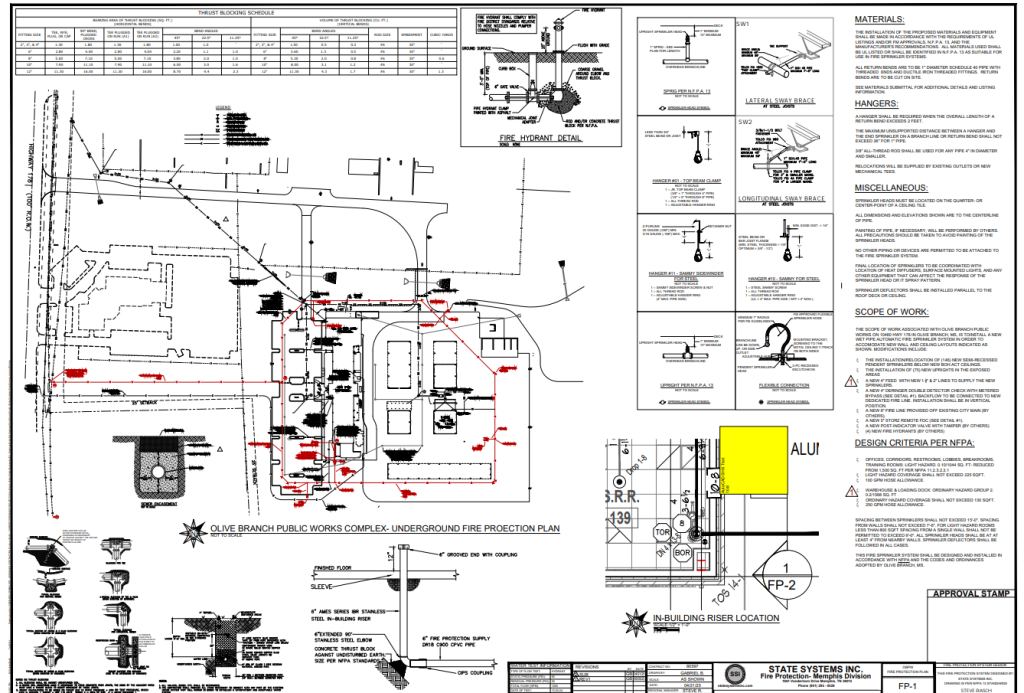
What Is Design-Build Fire Protection?
Design-build fire protection is a project approach that connects system design, coordination, installation, and service planning earlier in the construction process. Instead of treating fire protection as a separate step after plans are already developed, design-build fire protection helps align the fire alarm, sprinkler, suppression system, and life safety needs of a building with the overall project scope.
This approach can be especially valuable for commercial buildings, tenant improvements, renovations, expansions, and new construction projects. By involving qualified fire protection professionals early, contractors and facility teams can identify code requirements, layout challenges, equipment needs, and installation considerations before they create delays in the field.
What Does a Fire Sprinkler Designer Do?
A fire sprinkler designer helps plan the layout and performance of a building’s sprinkler system. Their work may include sprinkler head placement, pipe routing, hydraulic calculations, material lists, coordination drawings, and code review.
A fire sprinkler designer must consider the building’s occupancy, hazard classification, ceiling layout, storage arrangements, water supply, fire pump needs, and local code requirements. The goal is to create a sprinkler system that provides proper coverage, supports installation efficiency, and meets the applicable fire protection standards.
What Does a Fire Alarm Designer Do?
A fire alarm designer plans the devices, circuits, notification appliances, control panels, and monitoring requirements that make up a building’s fire alarm system. This may include smoke detectors, pull stations, horn strobes, control modules, annunciators, and other system components.
A fire alarm designer must understand how the building is used, how occupants should be notified, how the system connects to other building systems, and what local code officials require. A well-designed fire alarm system helps provide early warning, supports emergency response, and improves overall life safety.
Fire Alarm System Designer vs. Fire Protection Engineer
A fire alarm system designer often focuses on the technical layout and documentation needed for a specific fire alarm project. This may include drawings, device locations, wiring paths, equipment schedules, and installation details.
A fire protection engineer may be involved in broader fire and life safety planning, hazard analysis, code interpretation, and engineered system design. On some projects, both roles may be involved, along with NICET-certified designers, technicians, contractors, architects, and Authorities Having Jurisdiction.
Why Early Fire Protection Design Matters for CAPEX Planning
Early fire protection design helps reduce costly changes, project delays, and unexpected capital expenses. When fire sprinkler and fire alarm requirements are reviewed too late, teams may discover conflicts with ceilings, walls, mechanical systems, electrical layouts, occupancy requirements, or code compliance needs after budgets are already set.
Bringing a design-build fire protection team into the process earlier gives facility managers and project teams a clearer understanding of scope, system needs, equipment costs, and installation requirements. This makes it easier to plan for fire alarm upgrades, sprinkler modifications, suppression system changes, and other life safety improvements as part of the CAPEX planning process.
Instead of reacting to urgent deficiencies or last-minute design changes, early planning helps teams prioritize projects, control costs, and make smarter long-term investments in the systems that protect their buildings.
When to Involve a Design-Build Fire Protection Team
A design-build fire protection team should be involved during new construction, renovations, tenant finish projects, facility expansions, system replacements, and major building changes. Early involvement is especially helpful when a project includes fire alarm upgrades, sprinkler modifications, suppression system changes, or code-driven improvements.
The earlier the fire protection team is included, the easier it is to design systems that fit the building, meet code, and support the project schedule.
Work With State Systems on Fire Protection Design and Installation
State Systems supports commercial fire protection projects with design, installation, inspection, repair, monitoring, and ongoing service. Our team works with contractors, facility managers, building owners, and project teams to help plan and complete fire alarm, fire sprinkler, suppression, and life safety projects.
If your project needs a fire sprinkler designer, fire alarm designer, or design-build fire protection partner, State Systems can help you move from planning to installation with a team that understands commercial fire protection systems.